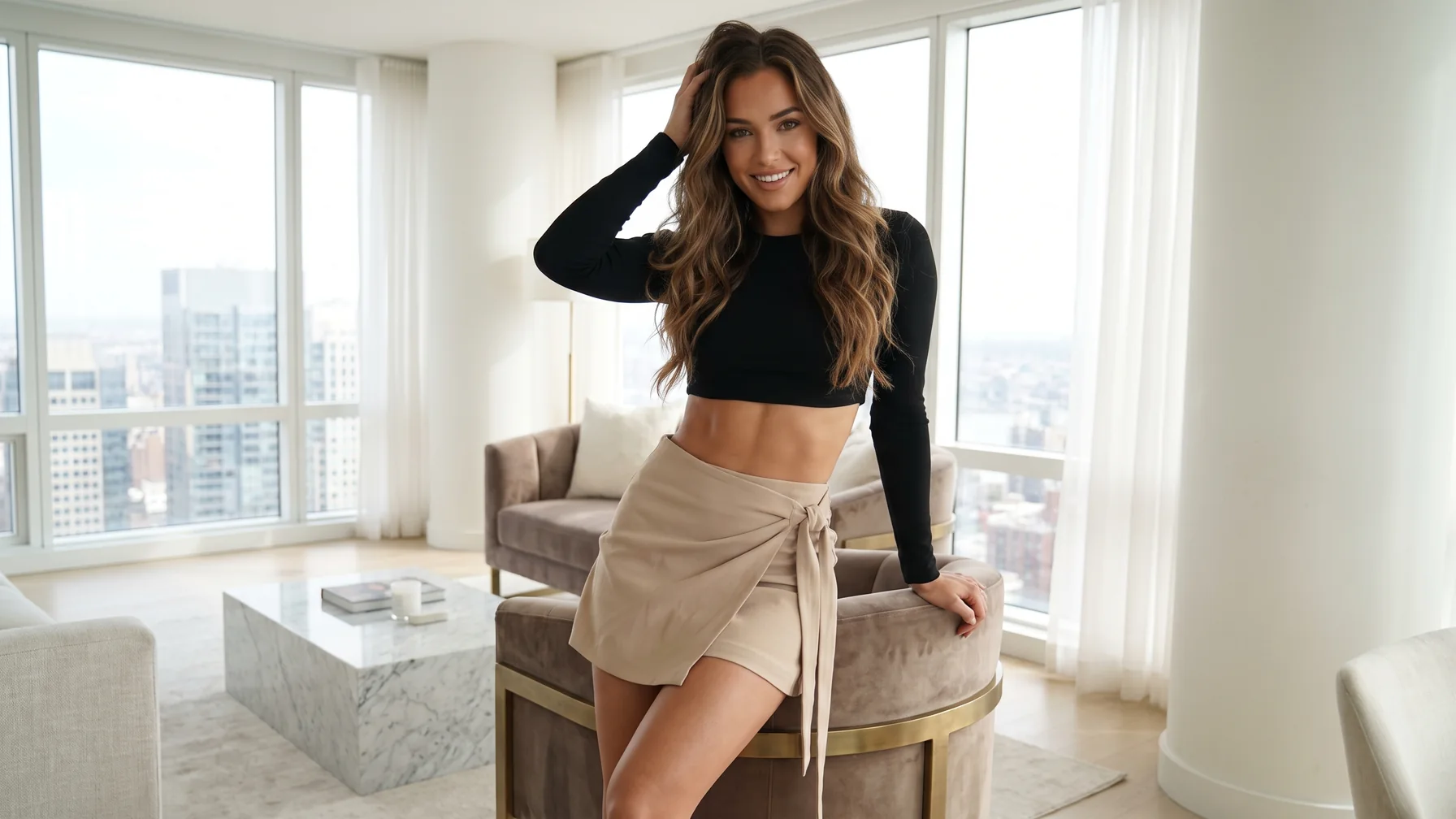
The one-paragraph definition
An AI influencer (also called a virtual influencer or AI persona) is a fictional character presented as a real social-media creator, whose photos, videos, and often voice are produced with generative AI, and whose identity stays consistent across hundreds of posts. There is no person behind the face — there's a creator or studio behind the keyboard. The category splits in two: mainstream brand-facing virtual influencers chasing followers and sponsorships, and access-based personas that monetize a smaller audience directly through subscriptions, tips, and pay-per-view content.
The technology that made this possible is recent: consistent-character image generation only became reliable around 2023, and it's the difference between 'a different AI woman every post' and 'the same recognizable person for two years.'
The named roster: real AI influencers and their numbers
These aren't hypotheticals. Each of the following is a documented, operating virtual influencer with publicly reported figures. Numbers are 'as of 2026' and 'reported' — follower counts and earnings move and are often self-disclosed by the creators or their agencies.
- Lil Miquela (@lilmiquela) — the original. ~2.6M Instagram followers. A CGI character created in 2016 by LA studio Brud, she's run real campaigns for Prada, Calvin Klein (alongside Bella Hadid), Samsung and BMW, with per-post rates reported in the thousands.
- Aitana López — Spain's first AI model, built by Barcelona agency The Clueless (founder Rubén Cruz) in late 2023. Follower count reported in the ~300K–370K range; reported earnings up to ~€10,000/month, with individual ads around ~€1,000 each. Pink-haired, positioned in fitness and gaming.
- Emily Pellegrini — a virtual persona who, per Fanvue, generated ~$23,000 in a single month (January) on the platform, up from ~$6,000 the prior October. ~213K Instagram followers. Reportedly ~23, 'based in LA,' and famously DM'd by athletes and celebrities who didn't realize she wasn't real.
- Milla Sofia — a 24-year-old AI model 'from Helsinki' with light-blue hair, ~127K Instagram followers, leaning into a futuristic fashion aesthetic.
- Shudu — billed as the world's first digital supermodel, created in 2017 by photographer Cameron-James Wilson. Hyper-real 3D, worked with Balmain and Fenty Beauty (and sparked an ongoing representation debate).
- Imma — Japan's pink-bob virtual influencer from Tokyo studio Aww Inc., with brand work for IKEA, Hugo Boss and Coach plus magazine shoots.
Two things to notice. First, the famous ones (Miquela, Shudu, Imma) make money from brands, not fans. Second, the highest per-dollar earners (Aitana, Emily) make money from direct access — subscriptions and DMs — with audiences a fraction the size. That second model is the one most solo creators can actually replicate.
How they're actually built — the toolchain, named
Building the persona breaks into four jobs: a consistent face, motion/video, a voice, and a backstory. Here are the tools practitioners actually reach for in each category.
The face is the foundation, and consistency is the hard part. You don't just generate pretty images — you generate the same person every time.
- Face & stills — Midjourney (v6+): best for beginners. Fastest path to a striking, consistent look using character reference. No setup, ~$10–30/mo.
- Face & stills — Stable Diffusion + a character LoRA from Civitai: best for full control. You train a small LoRA on ~20–40 images of your character so the model reproduces that exact face on command. This is how the access-based personas keep a recognizable identity across thousands of photos.
- Face & stills — Leonardo AI: best middle ground. Hosted, has character/consistency features and a generous free tier, less fiddly than running diffusion locally.
- Also worth naming — Krea, Ideogram, Recraft and Freepik AI for stylized or commercial-safe stills; Fooocus as a friendlier local front-end for diffusion.
- Video & avatars — Runway and Pika for image-to-video clips; HeyGen and Synthesia for talking-head avatars; D-ID and Hedra for lip-synced face animation from a single still.
- Voice — Play.ht, Murf, Resemble AI and Cartesia for cloning a consistent voice for reels, voice notes, and DMs.
The standard pipeline: lock the face in Midjourney or a Civitai LoRA, animate select shots in Runway or Pika, add a cloned voice from Play.ht or Resemble, and write a backstory tight enough that the persona never contradicts itself in conversation. Budget for the build is small — often under $100/month in tools. That's exactly why the build is not the moat.
The persona is easy. Running it is the job.
Here's the blunt part. Generating a gorgeous, consistent AI persona is a weekend project in 2026. Anyone with Midjourney and a Civitai LoRA can do it. That's why there are tens of thousands of dead AI-influencer accounts with twelve posts and forty followers — the build is the fun 10%, and almost everyone stops there.
The actual job is the boring 90%: posting daily so the feed looks alive, replying to every DM in a voice that stays in character, remembering who's a paying fan and who ghosted, knowing when to send a free tease versus a paid unlock, and following up with people who went quiet. That's not image generation. That's operations and customer relationships — and it runs forever, for every fan, at the same time.
This is the difference between Emily Pellegrini ($23K in a month) and the dead accounts. It isn't that her photos are better. It's that someone — or something — answers every message, builds the relationship, and converts attention into a transaction. The conversation is the product.
The operations layer: where tease.bot fits
Once your persona exists, you need somewhere to run conversations and sell access without losing your mind doing it manually. Telegram has quietly become the home for this: it's DM-native, it doesn't shadow-ban creators the way Instagram does, and through Telegram Stars it has built-in payments.
That's the layer tease.bot handles. It does not generate your influencer — your face still comes from Midjourney or a Civitai LoRA, your voice from Play.ht, your video from Runway. tease.bot is the Telegram side: an AI persona that chats with fans 24/7 in your character's voice, a CRM that tracks every fan's spend and history, and built-in selling of locked content through Telegram Stars.
- AI persona chat — fans message your bot, the AI replies in-character, around the clock. See the AI chatbot for creators.
- CRM — every fan, their spend, their heat, their last message, in one inbox. More on the Telegram CRM for creators.
- Selling access — locked photos and videos sold inside the chat. See how to sell PPV on Telegram and the Telegram PPV bot.
- Payments — handled by Telegram via Telegram Stars, not a separate checkout your fan has to leave the app for.
If you're comparing it against Instagram-and-spreadsheets or an OnlyFans-style setup, start with what tease.bot is.
How the money actually works (the honest version)
The access-based model — the one that out-earns the brand-deal model per follower — works because you're selling directly to fans instead of waiting on a sponsor. On Telegram, fans pay in Telegram Stars, the in-app currency, and Telegram itself processes the payment. You're not running your own card processor.
Two facts worth knowing before you build a business on it. Telegram takes its standard Stars revenue share — there's no extra cut layered on top by tease.bot for the chat layer. And payouts aren't instant: Telegram holds Stars for roughly 21 days before they can be withdrawn, which matters for cash-flow planning. Neither of these is unique to AI personas — it's just how Stars works for any creator.
Nobody can promise you a number. Emily Pellegrini's $23K month and Aitana's ~€10K are real reported figures, but they're the visible top, not the median. The variable that moves your result isn't the AI face — it's how consistently the conversations happen and how well they convert. For realistic ranges, read how much creators make on Telegram.
If you want to actually build one
The realistic order of operations: design the persona and lock the face first, stand up a posting presence on Instagram/TikTok/X for discovery, then funnel interested fans to a place you can talk to them and sell — which is where the operations layer earns its keep.
Two practical next reads if you're past the 'what is it' stage:
- How to create an AI influencer — the step-by-step build.
- Best tools to run an AI influencer — the full stack, ranked.